

What Happens If Your CMP Breaks After a Website Update?
April 22, 2026
•

2 min read
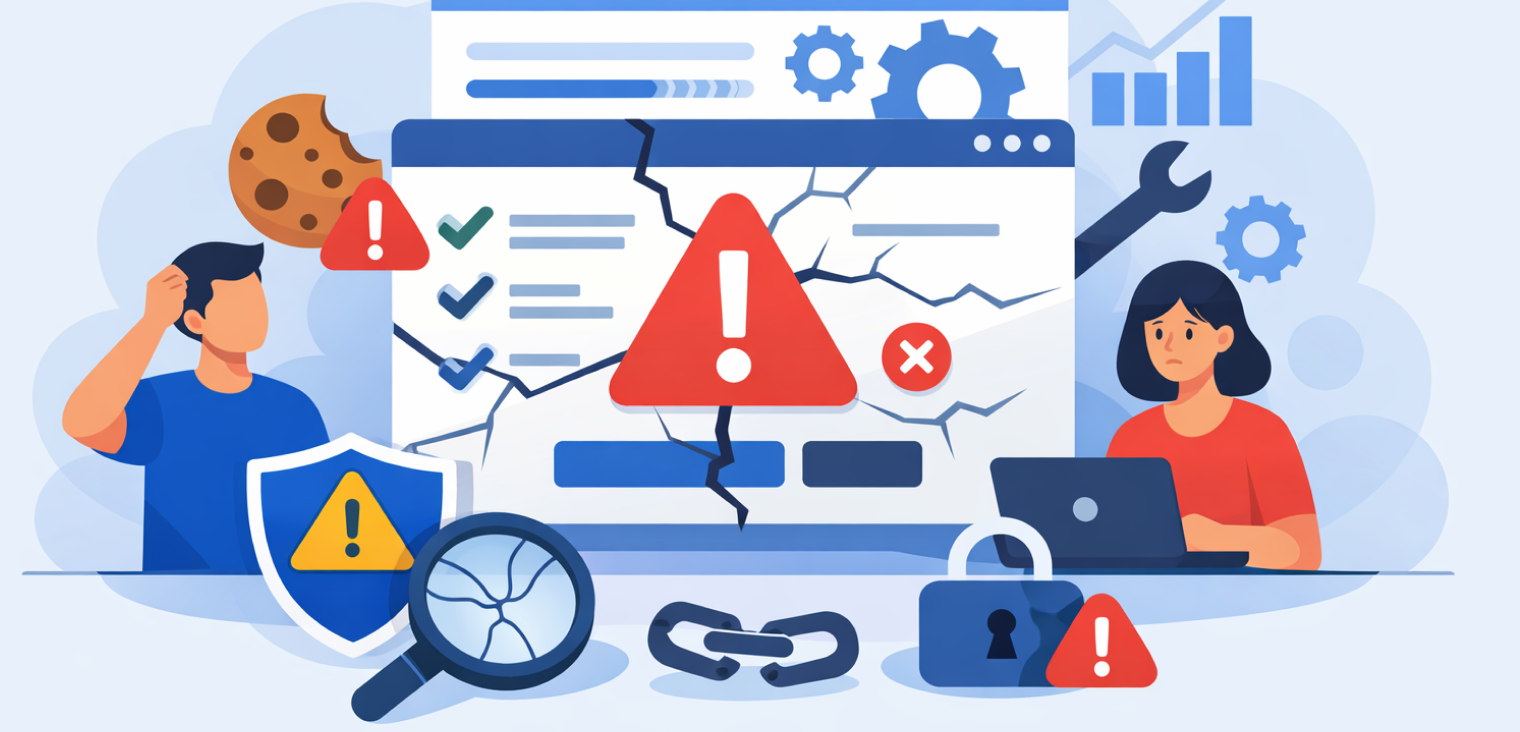
Table of contents
back
to the top
What Happens If Your CMP Breaks After a Website Update?
Website updates often introduce new scripts, plugins, or layouts.
But if your CMP breaks during an update, GDPR compliance breaks with it.
Here's why this matters and how to prevent it.
1. Website Updates Commonly Break CMPs
Common causes:
- New tags added without consent logic
- Tag manager updates
- Theme or plugin changes
- Hardcoded scripts bypassing CMP controls
2. Broken CMP = Invalid Consent
If tracking fires before consent:
- Consent is invalid
- GDPR is violated
- Logs become unreliable
Intent doesn't matter - behavior does.
3. Regulators Expect Ongoing Compliance
Compliance is continuous.
"I didn't know" is not a defense.
4. Regular Testing Is Mandatory
You should:
- Test consent after every update
- Scan for new cookies
- Verify blocking behavior
5. Cookiepal Protects Against Silent Failures
Cookiepal helps by:
- Detecting new cookies
- Blocking unauthorized tracking
- Alerting teams to compliance risks
- Maintaining valid consent logs
Final Takeaway
A broken CMP silently creates GDPR violations. Cookiepal ensures your consent system stays intact, even after website updates.
Sources & References
Explore further
Does reCAPTCHA Require Cookie Consent?
reCAPTCHA can be exempt as necessary security, but not every setup is. Learn how to assess your reCAPTCHA version, audit its cookies and keep forms working when visitors say no.
October 15, 2026
7 min
Do Live Chat Widgets Require Cookie Consent?
Chat widgets like Intercom and Zendesk often track visitors before anyone says hello. Learn which chat cookies need consent, which may be exempt and how to test your setup.
October 15, 2026
7 min

Shopify Customer Events, Pixels and Cookie Consent
Shopify pixels still collect and send customer data, so they still need consent. Learn how app pixels, custom pixels and the Customer Privacy API should work with your CMP.
October 8, 2026
7 min