

GDPR & Google Ads: A Simple Guide to Compliance and Tracking
January 15, 2026
•

4 min read
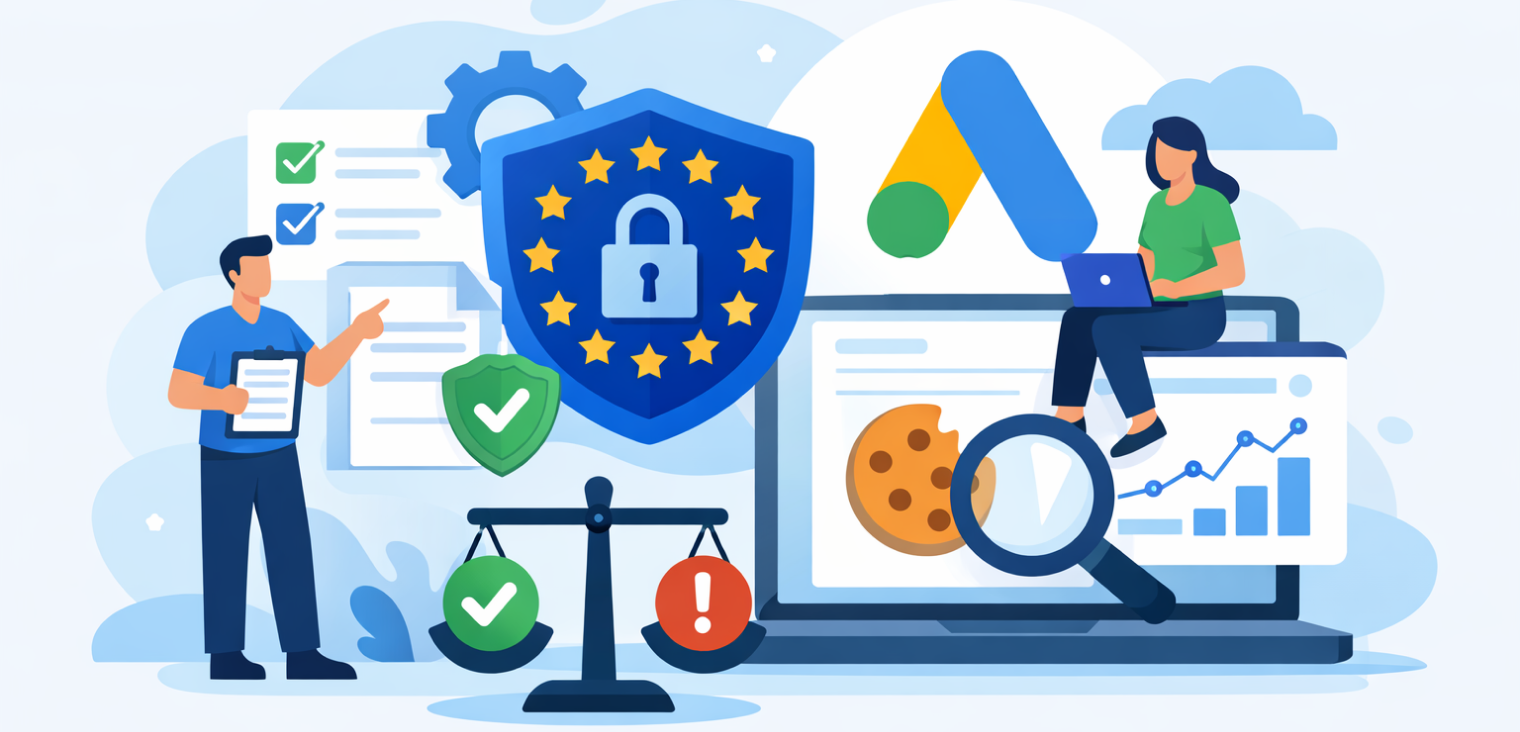
Table of contents
back
to the top
GDPR & Google Ads: A Simple Guide to Compliance and Tracking
A simple guide to understanding how Google Ads cookies work and how to use them responsibly with a CMP.
If you run digital ads, you’ve likely relied on Google Ads cookies for measuring conversions, optimizing performance, and running remarketing campaigns. But as privacy laws tighten worldwide, these cookies now require careful handling, especially when it comes to consent.
This blog breaks down what Google Ads cookies are, how they work, where compliance risks appear, and how a Consent Management Platform (CMP) like Cookiepal.io helps you stay transparent and user-friendly.
1. What Are Google Ads Cookies?
Google Ads cookies are small identifiers stored in a user’s browser when your site uses Google’s advertising tools. These cookies help Google understand:
-
whether an ad click led to a conversion
-
which campaign, keyword, or creative drove that action
-
how to optimize your bidding
-
whether users should be shown remarketing ads
-
how often an ad has been shown to someone
Common types of Google Ads cookies
✔ Conversion cookies
Record when an ad interaction results in a signup, purchase, or other conversion.
✔ Remarketing cookies
Allow Google to show follow-up ads to past visitors.
✔ Ad personalization cookies
Tailor ads to individual interests and behaviors across sites.
2. How Google Ads Uses These Cookies
Conversion measurement
A cookie is stored when a user interacts with an ad, helping Google match that click to a later conversion. This enables accurate reporting for performance analysis.
Attribution
Cookies help determine which ad is responsible for a conversion — a crucial piece of data for campaign budgeting.
Optimization & Smart Bidding
Google’s machine learning models rely on these cookies to spot high-intent audiences and adjust bids accordingly.
Remarketing campaigns
Cookies allow advertisers to re-engage people who visited the site but didn’t complete an action.
Frequency capping
Prevents a user from seeing the same ad too many times.
3. Compliance Risks With Google Ads Cookies
Using Google Ads cookies without consent can put your business at risk. Here’s where compliance issues arise:
Consent requirement under GDPR & ePrivacy
Ad personalization, remarketing, and conversion tracking cookies cannot be placed without valid user consent in the EU/EEA.
Global Privacy Control (GPC) & US privacy laws
Under CPRA and other state laws, you must honor browser-level opt-out signals that indicate users do not want their data shared for targeted advertising.
Transparency expectations
Your cookie policy should clearly explain:
-
which Google Ads cookies you use
-
why you use them
-
how users can manage their choices
Data retention
Personal identifiers used for Google Ads must be stored only as long as necessary and deleted when no longer required.
4. Best Practices for Using Google Ads Cookies Responsibly
To balance strong advertising performance with compliance, here are actionable steps:
1. Use a certified CMP to obtain consent
Your CMP should block Google Ads scripts until the user agrees to relevant purposes (e.g., “Advertising” or “Marketing”).
2. Fire Google Ads tags only after consent
Use a tag manager like Google Tag Manager (GTM) to link tag firing to the consent state.
3. Offer granular consent categories
Avoid bundling all cookies into a single “Accept All.”
Provide clear options such as:
-
Functional
-
Analytics
-
Advertising
4. Automatically honor opt-out signals
Ensure that browser-based signals like GPC result in immediate blocking of advertising cookies.
5. Maintain audit-ready consent logs
Your CMP should store proof of:
-
when a user gave consent
-
what version of the notice they saw
-
their consent preferences
6. Apply Google Consent Mode where relevant
Consent Mode allows Google to model certain conversions even when users reject advertising cookies, helping reduce data loss.
How Cookiepal.io Helps
Cookiepal simplifies the complex world of Google Ads compliance by:
-
blocking ad cookies until consent is given
-
triggering Google Ads tags only when allowed
-
supporting Consent Mode
-
providing purpose-based consent categories
-
maintaining complete consent logs
-
honoring browser opt-out signals automatically
This ensures your Google Ads setup works smoothly without compromising user trust or regulatory compliance.
Final Takeaway
Google Ads cookies remain essential for accurate measurement, optimization, and remarketing but they must be handled responsibly. With privacy expectations rising, businesses need a consent-first approach that protects both performance and transparency.
With a CMP like Cookiepal.io, you can run Google Ads confidently, knowing your tracking respects user choices every step of the way.
Explore further

Shopify Customer Events, Pixels and Cookie Consent
Shopify pixels still collect and send customer data, so they still need consent. Learn how app pixels, custom pixels and the Customer Privacy API should work with your CMP.
October 8, 2026
7 min
WordPress Cookie Consent: Which Plugins and Scripts Need Blocking?
A WordPress banner is not enough if plugins load trackers before consent. Learn which analytics, ad, chat and embed scripts need blocking and how to audit your full stack.
October 8, 2026
7 min
Klaviyo, Shopify and Consent: What E-Commerce Stores Need to Check
Shopify and Klaviyo can track and contact customers in ways they never agreed to. Learn how to align cookie, email and SMS consent across checkout, forms, flows and data sync.
October 1, 2026
7 min