

¿Se requiere consentimiento de cookies para los videos incrustados?
11 de junio de 2026
•

4 min de lectura
Índice
Volver
Volver arriba
¿Se requiere consentimiento de cookies para los videos incrustados?
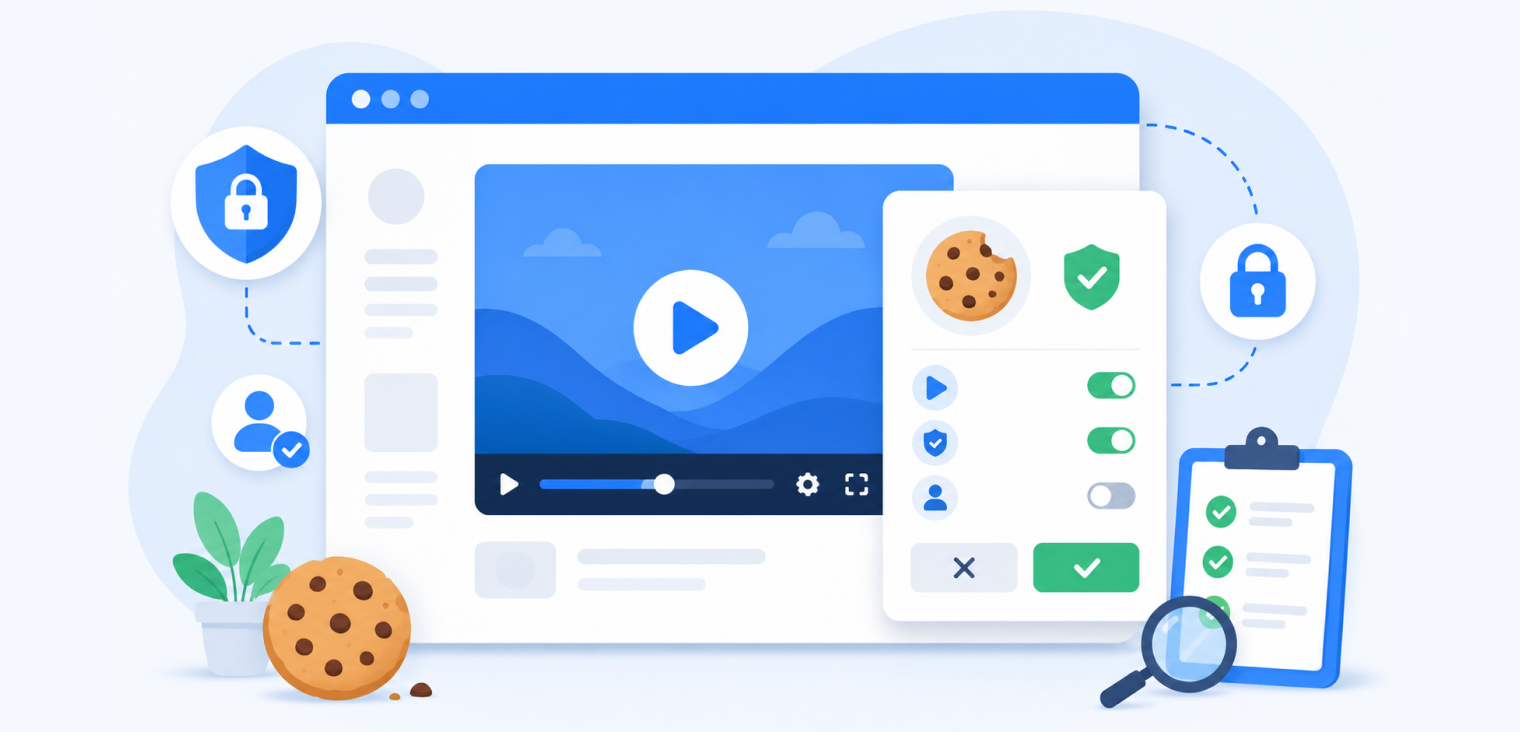
Los videos incrustados de YouTube, Vimeo, TikTok y otras plataformas son elementos de contenido muy comunes, pero a menudo incluyen capas ocultas de seguimiento. Incluso si incrustas el video tú mismo, la plataforma puede establecer cookies o recopilar datos cuando se reproduce.
Este artículo explica cuándo se requiere el consentimiento de cookies y cómo incrustar videos manteniendo el cumplimiento con el GDPR.
1. Por qué los videos incrustados activan reglas de consentimiento
La mayoría de las incrustaciones de video cargan contenido desde un dominio de terceros.
Por ejemplo:
- YouTube carga contenido desde
youtube.com - Vimeo carga contenido desde
vimeo.com - TikTok carga contenido desde
tiktok.com
Estos dominios de terceros pueden:
- Establecer cookies
- Rastrear interacciones del usuario
- Compartir identificadores entre sitios
Incluso antes de que el usuario reproduzca el video.
Este comportamiento se considera seguimiento de terceros y requiere consentimiento.
2. Reproducción automática vs. clic para reproducir
- Las incrustaciones con reproducción automática cargan el video y los scripts de inmediato, y a menudo colocan cookies antes de que exista interacción.
- Las incrustaciones con clic para reproducir retrasan la carga hasta que el usuario hace clic en la miniatura.
El GDPR favorece claramente las incrustaciones con clic para reproducir, porque retrasan el seguimiento hasta después del consentimiento.
Si el usuario no hace clic en reproducir, no debería establecerse ninguna cookie no esencial.
3. Cómo ve el GDPR el seguimiento en videos incrustados
Bajo el GDPR, la recopilación de datos debe ser:
- Transparente
- Específica en su finalidad
- Basada en consentimiento para cookies no esenciales
Si un servicio de video incrustado establece cookies de seguimiento antes del consentimiento, tu sitio es responsable de ese comportamiento.
4. Buena práctica: usar incrustaciones con privacidad mejorada
Algunas plataformas ofrecen modos de incrustación con privacidad mejorada que:
- No almacenan cookies hasta la reproducción
- Limitan el seguimiento
- Retrasan la carga de scripts
Algunos ejemplos:
- El dominio
nocookiede YouTube - La configuración de privacidad de Vimeo
- Componentes personalizados de clic para reproducir
Estas opciones reducen el riesgo de seguimiento previo al consentimiento.
5. Cómo las CMP controlan el seguimiento de video
Una CMP compatible debe:
- Bloquear scripts de video incrustado hasta obtener consentimiento
- Permitir imágenes placeholder con clic para reproducir
- Cargar el video real solo después del opt-in
- Registrar las elecciones del usuario para estar preparado ante auditorías
Esto garantiza que los visitantes puedan ver videos sin seguimiento no deseado.
Conclusión
Los videos incrustados pueden activar requisitos de consentimiento bajo el GDPR porque los scripts de terceros suelen establecer cookies al cargarse. Usar incrustaciones optimizadas para la privacidad y retrasar la activación de scripts hasta después del consentimiento mantiene tu sitio conforme y más respetuoso con el usuario.
Fuentes
Explorar más

Customer events de Shopify, píxeles y consentimiento de cookies
Los píxeles de Shopify siguen enviando datos de clientes y necesitan consentimiento. Descubre cómo deben funcionar los app pixels, los píxeles personalizados y la Customer Privacy API con tu CMP.
8 de octubre de 2026
7 min
Consentimiento de cookies en WordPress: ¿qué plugins y scripts hay que bloquear?
Un banner en WordPress no basta si los plugins cargan rastreadores antes del consentimiento. Descubre qué scripts de analítica, anuncios, chat y embeds bloquear y cómo auditar tu sitio web.
8 de octubre de 2026
7 min
Klaviyo, Shopify y consentimiento: lo que las tiendas de e-commerce deben revisar
Shopify y Klaviyo pueden hacer seguimiento y contactar a clientes sin su permiso. Descubre cómo alinear el consentimiento de cookies, email y SMS en el checkout, formularios, flujos y sincronización.
1 de octubre de 2026
7 min