

CMP Myths Busted, Part 5: “Using a CMP Guarantees Full Compliance”
January 08, 2026
•

3 min read
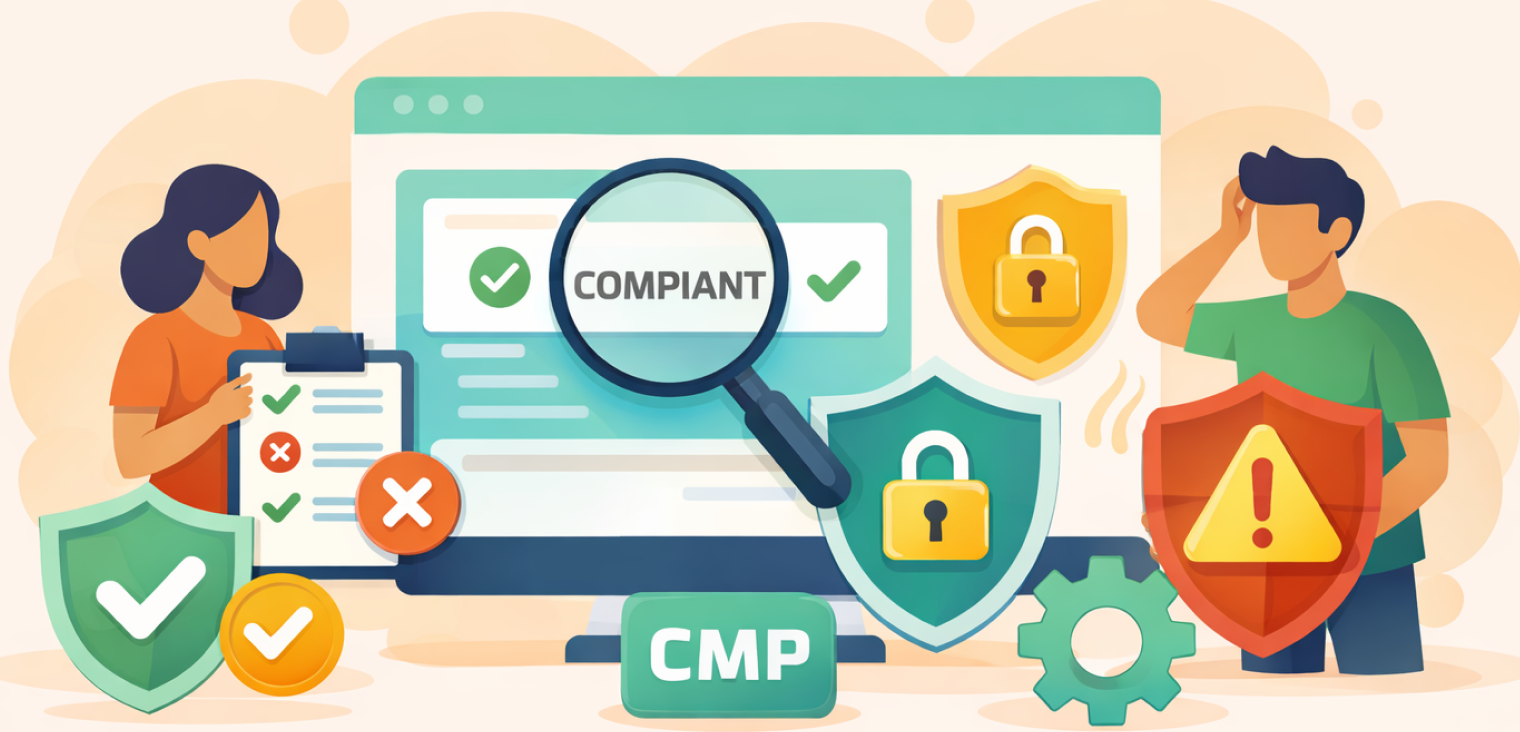
Table of contents
back
to the top
CMP Myths Busted, Part 5: “Using a CMP Guarantees Full Compliance”
Consent banners are everywhere. And most companies believe that simply installing a Consent Management Platform (CMP) means they're instantly compliant with regulations like the GDPR, UK GDPR, and other global privacy laws.
Unfortunately, that’s not how compliance works.
A CMP is a powerful tool but only when it’s properly configured, legally aligned, and regularly maintained. In this article, we bust the common myth that a CMP guarantees full compliance, and explain what you really need to do to stay protected.
The Myth: “A CMP Automatically Makes You GDPR-Compliant”
This belief is common because:
-
CMPs promise “easy compliance” or “one-click solutions”
-
Legal and marketing teams want a quick fix
-
Many free cookie banners appear to meet the rules (but don’t)
The reality? Regulators don’t assess compliance by whether you have a CMP. They look at how you’re using it.
The Reality: A CMP Is Just the Framework
Think of a CMP like a security system for your house. Installing cameras and locks doesn’t make you fully secure — you still need to arm it, update it, and monitor it.
Likewise, your CMP needs ongoing attention in several key areas:
-
Correct tag behavior:
No scripts, tags, or trackers should fire before a user gives consent. -
Accurate cookie categorization:
Every tracker must be correctly labeled according to its purpose — for example, necessary, analytics, or marketing. -
A legally valid consent flow:
Users must receive clear, fair choices without nudging, manipulation, or dark patterns. -
Region-based rules:
Consent experiences must adjust automatically depending on each user’s location, such as GDPR for the EU or UK GDPR for the United Kingdom. -
Valid consent logging:
All consent decisions must be stored properly, time-stamped, and retrievable for audits. -
Preference management:
Users must be able to withdraw or change their consent at any time through an accessible settings interface.
Without these elements, your CMP is just window dressing.
What Happens When CMPs Are Misused?
Even with a CMP in place, you may still be:
-
Firing analytics tools before consent is given
-
Misclassifying cookies as “necessary” to bypass opt-ins
-
Offering incomplete or misleading consent choices
-
Ignoring data subject rights like withdrawal or access
-
Missing audit trails when regulators ask for proof
This is exactly why many companies with banners still end up under investigation or fined,the setup didn’t match legal requirements.
What True Compliance Requires (Beyond the Banner)
Here’s what using a CMP compliantly actually means:
1. Precise Tag Management
Connect your CMP with a tag manager (like GTM) to control when scripts fire based on user consent.
2. Granular Cookie Classification
Don’t rely on auto-detection alone. Review and assign cookies to the correct categories — especially for tools like Meta Pixel, Google Analytics, and HubSpot.
3. UX That Respects User Choice
Ensure equal prominence for “accept” and “reject” buttons, as required by GDPR. Avoid vague language or default opt-ins.
4. Geolocation Rules
Show banners only where legally required, with jurisdiction-specific messaging and logic (e.g., GDPR, UK GDPR, LGPD).
5. Up-to-Date Legal Alignment
Update your banner text, documentation, and consent flows based on latest guidance from regulators (like EDPB, ICO, CNIL).
6. Robust Consent Logs
Maintain detailed consent logs: who consented, to what, when, and from where. These are essential for audit readiness.
Final Takeaway
A CMP doesn’t guarantee compliance, it enables it. Without proper configuration, legal alignment, and monitoring, you’re just checking a box and still at risk.
Cookiepal is built to go beyond the banner. Our platform offers:
-
Expert-led implementation
-
Audit-ready consent logs
-
Full tag blocking and delayed firing
-
Jurisdiction-specific customization
-
Ongoing support and compliance updates
With the right CMP and the right team behind it compliance becomes manageable, trustworthy, and performance-friendly.
Sources
Explore further

Do A/B Testing Tools Require Cookie Consent?
A/B tests can store IDs, share events and feed ad audiences. Learn when experiments need consent, when a narrow exemption may apply and how to run tests without ignoring privacy.
October 22, 2026
9 min
Cookies, Local Storage and Session Storage: What Is the Difference?
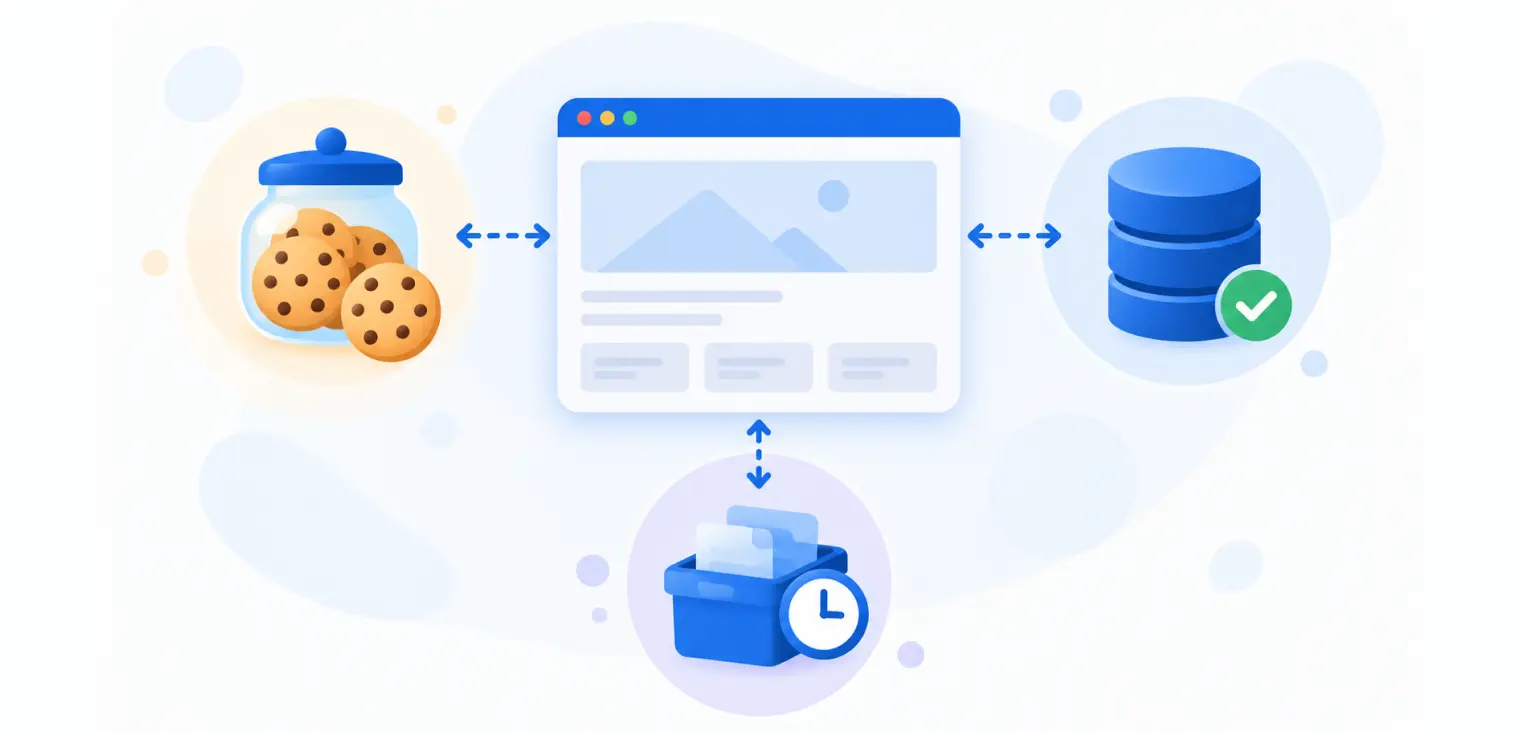
Cookies, local storage and session storage behave differently, but none is exempt from consent. Learn how each one works, which to use and how to review them in your consent process.
October 22, 2026
9 min
Does reCAPTCHA Require Cookie Consent?
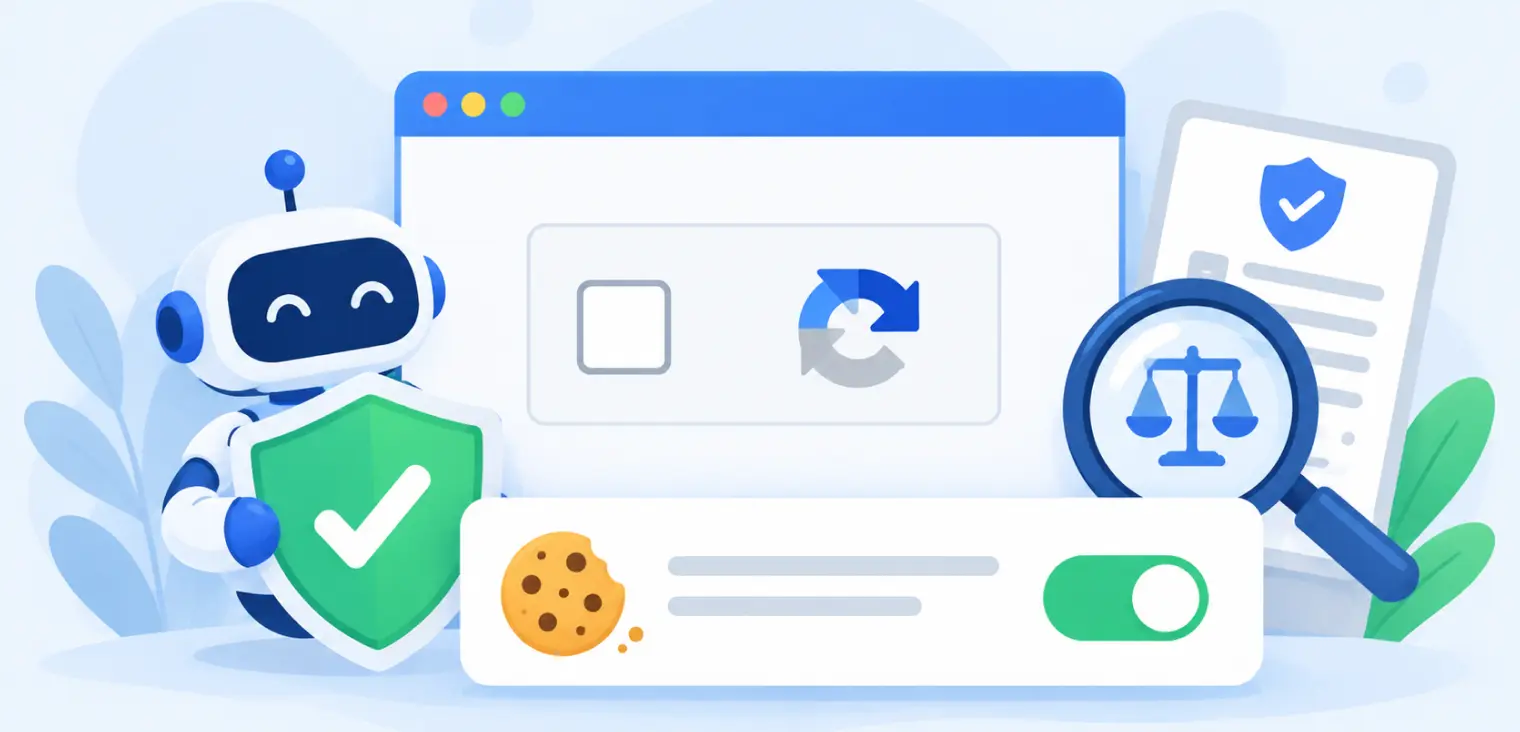
reCAPTCHA can be exempt as necessary security, but not every setup is. Learn how to assess your reCAPTCHA version, audit its cookies and keep forms working when visitors say no.
October 15, 2026
7 min