

¿Qué sucede si las cookies de terceros cambian sin que usted lo sepa?
3 de junio de 2026
•

4 min de lectura
Índice
Volver
Volver arriba
Qué sucede si las cookies de terceros cambian sin que usted lo sepa
Introducción
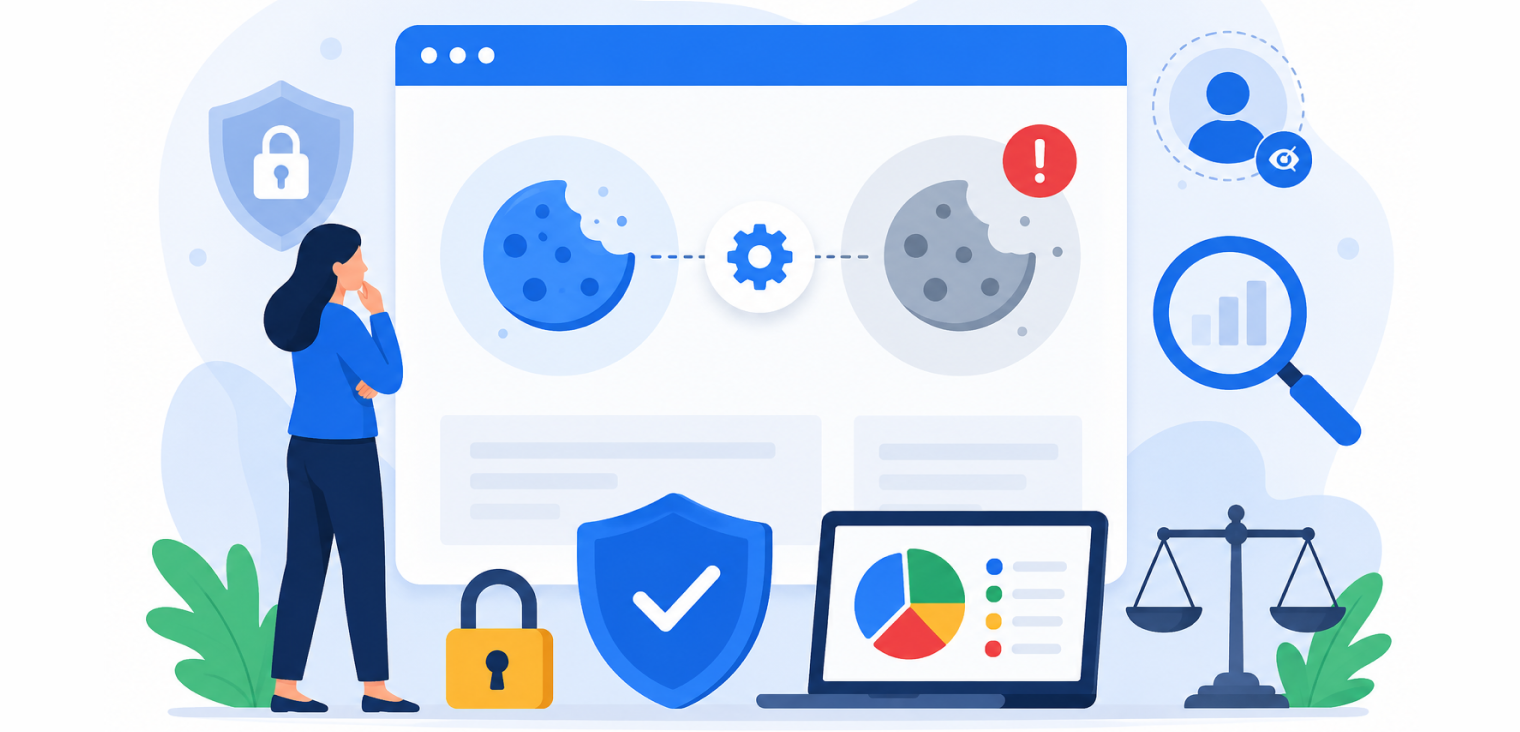
Los sitios web a menudo dependen de herramientas de terceros (análisis, marketing, chat, complementos) y la mayoría de ellos dependen de cookies. Pero, ¿qué sucede cuando estas cookies cambian de propósito sin su conocimiento?
Este blog explica por qué los cambios no supervisados en las cookies de terceros pueden alterar el cumplimiento de GDPR y cómo adelantarse a ellos.
1. El problema de los “cambios silenciosos”
Los proveedores externos actualizan periódicamente sus cookies:
- Los nombres cambian
- Cambio de propósitos (análisis → marketing)
- Aparecen nuevos dominios
- Los identificadores persistentes evolucionan
Estos cambios suelen ocurrir sin notificación.
Si su política de cookies y categorización de consentimiento no reflejan estas actualizaciones, su sitio deja de cumplir.
2. Por qué son importantes los cambios de propósito
Bajo GDPR:
- El consentimiento debe tener un propósito específico
- Los usuarios deben saber exactamente por qué se recopilan los datos.
Si una cookie utilizada inicialmente para análisis luego comienza a recopilar datos de orientación, el consentimiento original ya no es válido.
El consentimiento ya no coincide con el comportamiento de la cookie.
3. Escenarios comunes de cambio oculto
Ejemplos de cómo las cookies pueden cambiar sin que usted lo sepa:
- Un proveedor agrega capacidades de remarketing
- Un complemento comienza a rastrear el comportamiento entre sitios
- Un servicio actualiza su SDK con nuevos identificadores
- Las fuentes en la nube o las incrustaciones arrojan nuevas cookies
En todos los casos, el procesamiento real difiere del comportamiento documentado.
4. Por qué las auditorías manuales no son suficientes
Depender de listas de cookies manuales falla porque:
- Los cambios pueden ocurrir diariamente
- Es posible que los desarrolladores no conozcan las actualizaciones de backend de los proveedores
- Las políticas a menudo se vuelven obsoletas
- Es posible que los usuarios hayan dado su consentimiento para fines obsoletos
Las actualizaciones manuales simplemente no pueden seguir el ritmo.
5. Cómo los escáneres de cookies previenen las infracciones de cumplimiento
Escaneo de cookies regular y automatizado:
- Detecta nuevas cookies
- Las banderas cambiaron los propósitos de las cookies
- Relaciona el comportamiento con las categorías de consentimiento
- Activa CMP reconfiguración o reconsentimiento
Esto garantiza que su catálogo de consentimiento siga siendo preciso y legal.
Conclusión final
Las cookies de terceros pueden cambiar su propósito sin previo aviso, invalidando el consentimiento anterior y poniendo en riesgo GDPR violaciones. El escaneo continuo y la categorización precisa son esenciales para mantener la veracidad en el etiquetado y estar listo para las auditorías.
Fuentes
Explorar más
¿Las herramientas de pruebas A/B requieren consentimiento de cookies?
Las pruebas A/B pueden guardar IDs, compartir eventos y alimentar audiencias publicitarias. Descubre cuándo requieren consentimiento y cuándo puede aplicarse una exención limitada.
22 de octubre de 2026
9 min
Cookies, local storage y session storage: ¿cuál es la diferencia?
Las cookies, el local storage y el session storage funcionan de forma distinta, pero ninguno está exento de consentimiento. Descubre cómo funciona cada uno y cómo revisarlos.
22 de octubre de 2026
9 min
¿El reCAPTCHA requiere consentimiento de cookies?
El reCAPTCHA puede estar exento como seguridad necesaria, pero no toda configuración lo está. Descubre cómo evaluar tu versión, auditar sus cookies y mantener tus formularios activos.
15 de octubre de 2026
7 min